Local News
Province plans new education property tax calculation, projects $98.7M in savings
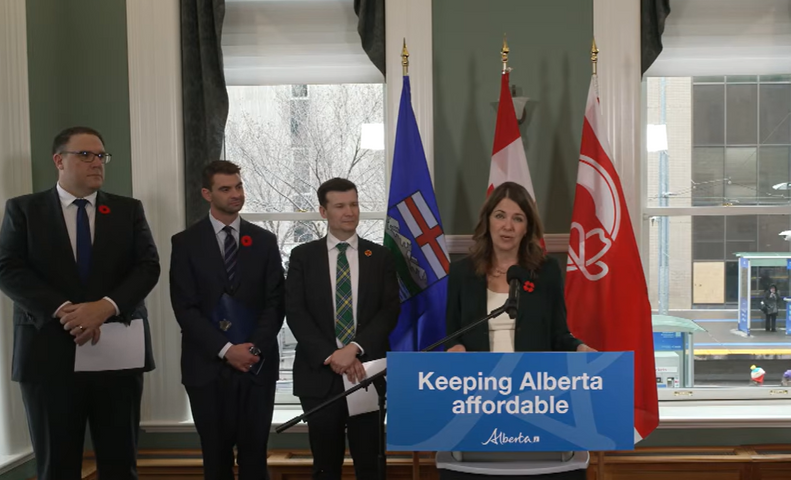
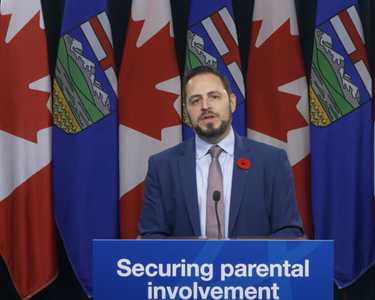
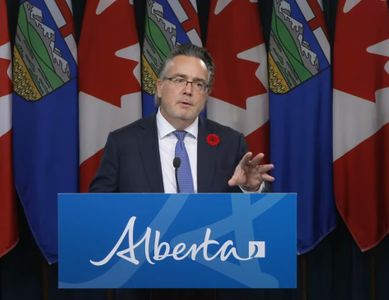
The provincial government plans to standardize education property tax rates across Alberta beginning in 2027 and freeze them for three years, a change it estimates will save property owners $98.7 million in 2027-28. Premier Danielle Smith announced the changes Friday, Oct. 30, alongside Finance Minister Jason Nixon and Municipal Affairs Minister Dan Williams at Calgary's historic city hall. Under the proposal, residential and farmland properties would be taxed at $2.65 per $1,000 of assessed value, while non-residential properties would face a provincial rate of approximately $3.98 per $1,000. The province acknowledges that its proposed rates may be higher than existing local education property tax rates in some communities. The government plans a one-time transition tax credit in 2027 to help limit the financial impact on affected households. The three-year freeze would apply to provincial education tax rates, not individual tax bills. Property owners could still pay more if their assessed values increase. Municipal property tax rates are set separately and would not be covered by the freeze. Related Stories: Province proposes report card standards, earlier school naming approval Childcare bill would expand incident reporting, parent notifications Alberta bill proposes defective vehicle remedies, repair rights, credit freezes How education property taxes would change Under the existing system, the province determines how much education property tax each municipality must collect using property assessments adjusted to allow comparisons across Alberta. The province's February 2026 education property tax fact sheet describes the process as a way to ensure owners of similar properties with comparable values contribute similar amounts toward education, regardless of municipality. Municipalities then establish their own education tax rates to collect the amounts assigned to them. Nixon criticized the resulting differences between local and provincial rates during Friday's news conference. "When rates vary by municipalities and don't align with the provincial rates, it makes tax bills harder to understand." Under the proposed system, municipalities would no longer be assigned predetermined amounts to collect. Instead, they would apply standardized provincial rates directly to current taxable property assessments. Properties in the same tax category with the same taxable assessed value would be taxed at the same provincial rate, regardless of municipality, although the proposed transition credit could affect what individual property owners pay in 2027. Williams said the new calculation would also eliminate a two-year delay in the assessment figures used to determine municipal education tax obligations. For 2026, the province used assessment figures reflecting property values from 2024 to calculate those amounts. That delay concerns the province's calculation of how much municipalities must collect, not the assessments municipalities already use to prepare individual property tax bills. For 2026-27, Alberta set provincial education tax rates of $2.84 per $1,000 of equalized assessment for residential and farmland properties and $4.17 for non-residential properties. Those rates are used to calculate municipal education tax obligations. The proposed 2027 rates would instead apply directly to individual taxable property assessments. Because the two systems use different calculations, comparing their rates does not establish how much a particular homeowner or business would save. Who would save — and who could pay more? The documents accompanying Friday's announcement do not show how the government's projected savings would be distributed among municipalities or property types. During the news conference, Nixon was asked whether the proposed transition credit would cover the entire difference for affected taxpayers or only part of an increase. "It will represent the entire difference. That's the intention of it." Nixon said that, assuming property assessments remained unchanged, nobody would pay more under the proposed system and the vast majority would pay less. However, he acknowledged that assessments would not remain unchanged in practice. His explanation concerned increases caused by switching to the new calculation, rather than additional taxes resulting from rising property assessments. The government's written announcement does not specify who would qualify, how individual credits would be calculated or whether further relief would be available after 2027. Questions also remain about what happens when the three-year rate freeze ends. Asked whether holding rates steady could result in a substantial increase in 2030, Nixon said the government would monitor property assessments and education tax revenue before making further decisions. He suggested rising assessments could generate enough additional revenue without requiring higher rates. He also raised the possibility of reducing rates if assessment growth produced more revenue than needed. Nixon did not rule out future increases. The freeze would also not prevent the province from collecting more education property tax revenue if taxable property assessments increase. How will the province replace the revenue? Budget 2026 projected a substantial increase in the amount of education property tax municipalities would be required to collect for the province. According to the government's February 2026 fact sheet, higher rates, rising property values and additional development were expected to increase the provincewide amount from $3.1 billion in 2025-26 to $3.6 billion in 2026-27. That represents a projected increase of approximately $500 million, rather than a final tally of additional tax collections. The share of education operating costs funded through property taxes was also expected to rise from 31.6 per cent to 33.4 per cent. The province said the increases were intended to help cover growing education operating costs as student enrolment continued to rise. The $98.7 million in projected savings announced Friday concerns the proposed changes for 2027-28. It is not a confirmed year-over-year reduction from the $3.6 billion projected for 2026-27. The documents accompanying the announcement do not include a complete education property tax revenue forecast for 2027-28 or the detailed calculations behind the savings estimate. Education property taxes help fund Alberta's public and separate schools, including teacher salaries, textbooks and classroom resources. The revenue supports school operations rather than school construction or teachers' pensions. Asked how the government intended to replace the nearly $100 million in education property tax revenue it expects to forgo, Nixon said the province was confident it could cover the reduction through general revenues without cutting education spending already approved under Budget 2026. He said further details would be provided with Budget 2027. What the changes mean for municipalities Municipalities would continue collecting provincial education property taxes through their regular property tax bills. Property owners would not receive separate provincial bills or have to follow a new payment process. Williams said legislation would need to pass before municipalities could issue tax notices under the proposed system in 2027. The government says further information about the rates, calculations and municipal requirements will be provided before municipalities adopt their 2027 tax bylaws. Edmonton Mayor Andrew Knack welcomed the proposal in the province's written announcement, saying it would simplify the calculation of education property taxes and provide greater transparency for residents. Calgary Mayor Jeromy Farkas, who joined provincial officials for Friday's announcement, said approximately 42 cents of every residential property tax dollar collected in Calgary goes to the province, while the remaining 58 cents goes to the city. "We collect the whole bill, but we don't control the whole bill." Farkas said knowing the provincial rates before municipal budget deliberations would help Calgary determine the overall tax burden facing residents. He expects the proposed changes could allow Calgary to pursue a smaller overall residential property tax increase than otherwise anticipated while continuing to invest in public safety and infrastructure. However, Farkas said council still has spending decisions to make and should not treat the announcement as permission to collect more money from residents than necessary. Opposition questions tax relief Opposition Leader Naheed Nenshi criticized the announcement in a statement Friday, arguing the proposed changes would provide limited relief after earlier property tax increases. "Last year, the province increased property taxes for the average Calgary home by over $350. Today, the UCP announced they will reduce that increase by a maximum of about $75 – for houses that don’t go up in value at all." Nenshi also accused the government of shifting the education property tax burden to rural homeowners, who he said would face increases after the next election. He criticized the government's broader response to rising living costs, including groceries and housing. The $350 and $75 figures cited by Nenshi, along with his claims about the impact on rural homeowners, are not independently established by the documents accompanying Friday's announcement. The province has not provided detailed municipal projections or final eligibility rules for the proposed transition credit.

















 Sat, Oct 31, 4:00 PM


 Full-time, Hourly, Labour, Skilled Trades